
Lincoln Navigator: Automatic Transmission - 10-Speed Automatic Transmission – 10R80 / DTC Chart and Pinpoint Tests - 3.5L EcoBoost (272kW/370PS). Diagnosis and Testing
Diagnostic Trouble Code (DTC) Chart
Diagnostics in this manual assume a certain skill level and knowledge of Ford-specific diagnostic practices.
REFER to: Diagnostic Methods (100-00 General Information, Description and Operation).
| Module | DTC | Description | Action |
|---|---|---|---|
| PCM | P0218:00 | Transmission Fluid Temperature Sensor 'A' Over Temperature Condition: No Sub Type Information | GO to Pinpoint Test AB |
| PCM | P0657:00 | Actuator Supply Voltage 'A' Circuit/Open: No Sub Type Information | GO to Pinpoint Test A |
| PCM | P0702:00 | Transmission Control System Electrical: No Sub Type Information | GO to Pinpoint Test J |
| PCM | P0706:00 | Transmission Range Sensor 'A' Circuit Range/Performance: No Sub Type Information | GO to Pinpoint Test C |
| PCM | P0707:00 | Transmission Range Sensor 'A' Circuit Low: No Sub Type Information | GO to Pinpoint Test C |
| PCM | P0708:00 | Transmission Range Sensor 'A' Circuit High: No Sub Type Information | GO to Pinpoint Test C |
| PCM | P0709:00 | Transmission Range Sensor 'A' Circuit Intermittent: No Sub Type Information | GO to Pinpoint Test C |
| PCM | P0710:00 | Transmission Fluid Temperature Sensor 'A' Circuit: No Sub Type Information | GO to Pinpoint Test B |
| PCM | P0711:00 | Transmission Fluid Temperature Sensor 'A' Circuit Range/Performance: No Sub Type Information | GO to Pinpoint Test B |
| PCM | P0712:00 | Transmission Fluid Temperature Sensor 'A' Circuit Low: No Sub Type Information | GO to Pinpoint Test B |
| PCM | P0713:00 | Transmission Fluid Temperature Sensor 'A' Circuit High: No Sub Type Information | GO to Pinpoint Test B |
| PCM | P0715:00 | Input/Turbine Shaft Speed Sensor 'A' Circuit: No Sub Type Information | GO to Pinpoint Test D |
| PCM | P0716:00 | Input/Turbine Shaft Speed Sensor 'A' Circuit Range/Performance: No Sub Type Information | GO to Pinpoint Test I |
| PCM | P0717:00 | Input/Turbine Shaft Speed Sensor 'A' Circuit No Signal: No Sub Type Information | GO to Pinpoint Test D |
| PCM | P0718:00 | Input/Turbine Shaft Speed Sensor 'A' Circuit Intermittent: No Sub Type Information | GO to Pinpoint Test D |
| PCM | P0720:00 | Output Shaft Speed Sensor Circuit: No Sub Type Information | GO to Pinpoint Test D |
| PCM | P0721:00 | Output Shaft Speed Sensor Circuit Range/Performance: No Sub Type Information | GO to Pinpoint Test I |
| PCM | P0722:00 | Output Shaft Speed Sensor Circuit No Signal: No Sub Type Information | GO to Pinpoint Test D |
| PCM | P0723:00 | Output Shaft Speed Sensor Circuit Intermittent: No Sub Type Information | GO to Pinpoint Test D |
| PCM | P0729:00 | Gear 6 Incorrect Ratio: No Sub Type Information | GO to Pinpoint Test K |
| PCM | P0731:00 | Gear 1 Incorrect Ratio: No Sub Type Information | GO to Pinpoint Test L |
| PCM | P0732:00 | Gear 2 Incorrect Ratio: No Sub Type Information | GO to Pinpoint Test M |
| PCM | P0733:00 | Gear 3 Incorrect Ratio: No Sub Type Information | GO to Pinpoint Test N |
| PCM | P0734:00 | Gear 4 Incorrect Ratio: No Sub Type Information | GO to Pinpoint Test O |
| PCM | P0735:00 | Gear 5 Incorrect Ratio: No Sub Type Information | GO to Pinpoint Test P |
| PCM | P0736:00 | Reverse Incorrect Ratio: No Sub Type Information | GO to Pinpoint Test Q |
| PCM | P0740:00 | Torque Converter Clutch Solenoid Circuit/Open: No Sub Type Information | GO to Pinpoint Test G |
| PCM | P0741:00 | Torque Converter Clutch Solenoid Circuit Performance/Stuck Off: No Sub Type Information | GO to Pinpoint Test R |
| PCM | P0743:00 | Torque Converter Clutch Solenoid Circuit Electrical: No Sub Type Information | GO to Pinpoint Test G |
| PCM | P0748:00 | Pressure Control Solenoid 'A' Electrical: No Sub Type Information | GO to Pinpoint Test G |
| PCM | P0751:00 | Shift Solenoid 'A' Performance/Stuck Off: No Sub Type Information | GO to Pinpoint Test R |
| PCM | P0752:00 | Shift Solenoid 'A' Stuck On: No Sub Type Information | GO to Pinpoint Test S |
| PCM | P0753:00 | Shift Solenoid 'A' Electrical: No Sub Type Information | GO to Pinpoint Test A |
| PCM | P0754:00 | Shift Solenoid 'A' Intermittent: No Sub Type Information | GO to Pinpoint Test A |
| PCM | P0756:00 | Shift Solenoid 'B' Performance/Stuck Off: No Sub Type Information | GO to Pinpoint Test R |
| PCM | P0757:00 | Shift Solenoid 'B' Stuck On: No Sub Type Information | GO to Pinpoint Test S |
| PCM | P0758:00 | Shift Solenoid 'B' Electrical: No Sub Type Information | GO to Pinpoint Test A |
| PCM | P0759:00 | Shift Solenoid 'B' Intermittent: No Sub Type Information | GO to Pinpoint Test A |
| PCM | P0761:00 | Shift Solenoid 'C' Performance/Stuck Off: No Sub Type Information | GO to Pinpoint Test R |
| PCM | P0762:00 | Shift Solenoid 'C' Stuck On: No Sub Type Information | GO to Pinpoint Test S |
| PCM | P0763:00 | Shift Solenoid 'C' Electrical: No Sub Type Information | GO to Pinpoint Test A |
| PCM | P0764:00 | Shift Solenoid 'C' Intermittent: No Sub Type Information | GO to Pinpoint Test A |
| PCM | P0766:00 | Shift Solenoid 'D' Performance/Stuck Off: No Sub Type Information | GO to Pinpoint Test R |
| PCM | P0767:00 | Shift Solenoid 'D' Stuck On: No Sub Type Information | GO to Pinpoint Test S |
| PCM | P0768:00 | Shift Solenoid 'D' Electrical: No Sub Type Information | GO to Pinpoint Test A |
| PCM | P0769:00 | Shift Solenoid 'D' Intermittent: No Sub Type Information | GO to Pinpoint Test A |
| PCM | P076F:00 | Gear 7 Incorrect Ratio: No Sub Type Information | GO to Pinpoint Test T |
| PCM | P0771:00 | Shift Solenoid 'E' Performance/Stuck Off: No Sub Type Information | GO to Pinpoint Test R |
| PCM | P0772:00 | Shift Solenoid 'E' Stuck On: No Sub Type Information | GO to Pinpoint Test S |
| PCM | P0773:00 | Shift Solenoid 'E' Electrical: No Sub Type Information | GO to Pinpoint Test A |
| PCM | P0774:00 | Shift Solenoid 'E' Intermittent: No Sub Type Information | GO to Pinpoint Test A |
| PCM | P077D:00 | Output Shaft Speed Sensor Circuit High: No Sub Type Information | GO to Pinpoint Test D |
| PCM | P0791:00 | Intermediate Shaft Speed Sensor 'A' Circuit: No Sub Type Information | GO to Pinpoint Test D |
| PCM | P0792:00 | Intermediate Shaft Speed Sensor 'A' Circuit Range/Performance: No Sub Type Information | GO to Pinpoint Test I |
| PCM | P0793:00 | Intermediate Shaft Speed Sensor 'A' Circuit No Signal: No Sub Type Information | GO to Pinpoint Test D |
| PCM | P0794:00 | Intermediate Shaft Speed Sensor 'A' Circuit Intermittent: No Sub Type Information | GO to Pinpoint Test D |
| PCM | P07BF:00 | Input/Turbine Shaft Speed Sensor 'A' Circuit Low: No Sub Type Information | GO to Pinpoint Test D |
| PCM | P07C0:00 | Input/Turbine Shaft Speed Sensor 'A' Circuit High: No Sub Type Information | GO to Pinpoint Test D |
| PCM | P07C5:00 | Intermediate Shaft Speed Sensor 'A' Circuit Low: No Sub Type Information | GO to Pinpoint Test D |
| PCM | P07C6:00 | Intermediate Shaft Speed Sensor 'A' Circuit High: No Sub Type Information | GO to Pinpoint Test D |
| PCM | P07C7:00 | Intermediate Shaft Speed Sensor 'B' Circuit Low: No Sub Type Information | GO to Pinpoint Test D |
| PCM | P07C8:00 | Intermediate Shaft Speed Sensor 'B' Circuit High: No Sub Type Information | GO to Pinpoint Test D |
| PCM | P07D9:00 | Gear 8 Incorrect Ratio: No Sub Type Information | GO to Pinpoint Test U |
| PCM | P07E4:00 | Unable to Engage Park: No Sub Type Information | GO to Pinpoint Test H |
| PCM | P07E6:00 | Stuck in Park: No Sub Type Information | GO to Pinpoint Test H |
| PCM | P07F6:00 | Gear 9 Incorrect Ratio: No Sub Type Information | GO to Pinpoint Test V |
| PCM | P07F7:00 | Gear 10 Incorrect Ratio: No Sub Type Information | GO to Pinpoint Test W |
| PCM | P0868:00 | Transmission Fluid Pressure Low: No Sub Type Information | GO to Pinpoint Test X |
| PCM | P0882:00 | TCM Power Input Signal Low: No Sub Type Information | GO to Pinpoint Test J |
| PCM | P0883:00 | TCM Power Input Signal High: No Sub Type Information | GO to Pinpoint Test J |
| PCM | P0884:00 | TCM Power Input Signal Intermittent: No Sub Type Information | GO to Pinpoint Test J |
| PCM | P0960:00 | Pressure Control Solenoid 'A' Control Circuit/Open: No Sub Type Information | GO to Pinpoint Test G |
| PCM | P0961:00 | Pressure Control Solenoid 'A' Control Circuit Range/Performance: No Sub Type Information | GO to Pinpoint Test G |
| PCM | P0962:00 | Pressure Control Solenoid 'A' Control Circuit Low: No Sub Type Information | GO to Pinpoint Test G |
| PCM | P0963:00 | Pressure Control Solenoid 'A' Control Circuit High: No Sub Type Information | GO to Pinpoint Test G |
| PCM | P0973:00 | Shift Solenoid 'A' Control Circuit Low: No Sub Type Information | GO to Pinpoint Test A |
| PCM | P0974:00 | Shift Solenoid 'A' Control Circuit High: No Sub Type Information | GO to Pinpoint Test A |
| PCM | P0976:00 | Shift Solenoid 'B' Control Circuit Low: No Sub Type Information | GO to Pinpoint Test A |
| PCM | P0977:00 | Shift Solenoid 'B' Control Circuit High: No Sub Type Information | GO to Pinpoint Test A |
| PCM | P0979:00 | Shift Solenoid 'C' Control Circuit Low: No Sub Type Information | GO to Pinpoint Test A |
| PCM | P097A:00 | Shift Solenoid 'A' Control Circuit/Open: No Sub Type Information | GO to Pinpoint Test A |
| PCM | P097B:00 | Shift Solenoid 'B' Control Circuit/Open: No Sub Type Information | GO to Pinpoint Test A |
| PCM | P097C:00 | Shift Solenoid 'C' Control Circuit/Open: No Sub Type Information | GO to Pinpoint Test A |
| PCM | P097D:00 | Shift Solenoid 'D' Control Circuit/Open: No Sub Type Information | GO to Pinpoint Test A |
| PCM | P097E:00 | Shift Solenoid 'E' Control Circuit/Open: No Sub Type Information | GO to Pinpoint Test A |
| PCM | P097F:00 | Shift Solenoid 'F' Control Circuit/Open: No Sub Type Information | GO to Pinpoint Test A |
| PCM | P0980:00 | Shift Solenoid 'C' Control Circuit High: No Sub Type Information | GO to Pinpoint Test A |
| PCM | P0982:00 | Shift Solenoid 'D' Control Circuit Low: No Sub Type Information | GO to Pinpoint Test A |
| PCM | P0983:00 | Shift Solenoid 'D' Control Circuit High: No Sub Type Information | GO to Pinpoint Test A |
| PCM | P0985:00 | Shift Solenoid 'E' Control Circuit Low: No Sub Type Information | GO to Pinpoint Test A |
| PCM | P0986:00 | Shift Solenoid 'E' Control Circuit High: No Sub Type Information | GO to Pinpoint Test A |
| PCM | P0998:00 | Shift Solenoid 'F' Control Circuit Low: No Sub Type Information | GO to Pinpoint Test A |
| PCM | P0999:00 | Shift Solenoid 'F' Control Circuit High: No Sub Type Information | GO to Pinpoint Test A |
| PCM | P0B0D:00 | Electric/Auxiliary Transmission Fluid Pump Motor Control Module: No Sub Type Information | GO to Pinpoint Test F |
| PCM | P0C27:00 | Electric/Auxiliary Transmission Fluid Pump 'A' Motor Current Low: No Sub Type Information | GO to Pinpoint Test F |
| PCM | P0C28:00 | Electric/Auxiliary Transmission Fluid Pump 'A' Motor Current High: No Sub Type Information | GO to Pinpoint Test E |
| PCM | P0C29:00 | Electric/Auxiliary Transmission Fluid Pump 'A' Driver Circuit Performance: No Sub Type Information | GO to Pinpoint Test E |
| PCM | P0C2A:00 | Electric/Auxiliary Transmission Fluid Pump 'A' Motor Stalled: No Sub Type Information | GO to Pinpoint Test E |
| PCM | P0C2C:00 | Electric Transmission Fluid Pump Control Module Feedback Signal Range/Performance: No Sub Type Information | GO to Pinpoint Test E |
| PCM | P0C2D:00 | Electric Transmission Fluid Pump Control Module Feedback Signal Low: No Sub Type Information | GO to Pinpoint Test E |
| PCM | P0C2E:00 | Electric Transmission Fluid Pump Control Module Feedback Signal High: No Sub Type Information | GO to Pinpoint Test E |
| PCM | P1397:00 | System Voltage Out Of Self Test Range: No Sub Type Information | GO to Pinpoint Test J |
| PCM | P1636:00 | Inductive Signature Chip Communication Error: No Sub Type Information | GO to Pinpoint Test Y |
| PCM | P163E:00 | Transmission Control Module Programming Error: No Sub Type Information | GO to Pinpoint Test Y |
| PCM | P163F:00 | Transmission ID Block Corrupted, Not Programmed: No Sub Type Information | GO to Pinpoint Test Y |
| PCM | P1705:00 | Transmission Range Circuit Not Indicating Park/Neutral During Self Test: No Sub Type Information | GO to Pinpoint Test C |
| PCM | P1706:00 | High Vehicle Speed Observed in Park: No Sub Type Information | GO to Pinpoint Test Z |
| PCM | P1711:00 | Transmission Fluid Temperature Sensor Out Of Self Test Range: No Sub Type Information | GO to Pinpoint Test AA |
| PCM | P1744:00 | Torque Converter Clutch Solenoid Circuit Performance: No Sub Type Information | GO to Pinpoint Test R |
| PCM | P175A:00 | Transmission Fluid Over Temperature Condition - Electric Transmission Fluid Pump Disabled: No Sub Type Information | GO to Pinpoint Test F |
| PCM | P1783:00 | Transmission Overtemperature Condition: No Sub Type Information | GO to Pinpoint Test AB |
| PCM | P179D:00 | Neutral Mode Exceeded Speed/Distance Conditions: No Sub Type Information | GO to Pinpoint Test AC |
| PCM | P1A02:00 | Transmission One Way Clutch Performance: No Sub Type Information | GO to Pinpoint Test AD |
| PCM | P2669:00 | Actuator Supply Voltage 'B' Circuit/Open: No Sub Type Information | GO to Pinpoint Test G |
| PCM | P26C3:00 | Internal Control Module Transmission Range Sensor Performance: No Sub Type Information | GO to Pinpoint Test C |
| PCM | P2700:00 | Transmission Friction Element 'A' Apply Time Range/Performance: No Sub Type Information | GO to Pinpoint Test AE |
| PCM | P2701:00 | Transmission Friction Element 'B' Apply Time Range/Performance: No Sub Type Information | GO to Pinpoint Test AE |
| PCM | P2702:00 | Transmission Friction Element 'C' Apply Time Range/Performance: No Sub Type Information | GO to Pinpoint Test AE |
| PCM | P2703:00 | Transmission Friction Element 'D' Apply Time Range/Performance: No Sub Type Information | GO to Pinpoint Test AE |
| PCM | P2704:00 | Transmission Friction Element 'E' Apply Time Range/Performance: No Sub Type Information | GO to Pinpoint Test AE |
| PCM | P2705:00 | Transmission Friction Element 'F' Apply Time Range/Performance: No Sub Type Information | GO to Pinpoint Test AE |
| PCM | P2707:00 | Shift Solenoid 'F' Performance/Stuck Off: No Sub Type Information | GO to Pinpoint Test R |
| PCM | P2708:00 | Shift Solenoid 'F' Stuck On: No Sub Type Information | GO to Pinpoint Test S |
| PCM | P2709:00 | Shift Solenoid 'F' Electrical: No Sub Type Information | GO to Pinpoint Test A |
| PCM | P2710:00 | Shift Solenoid 'F' Intermittent: No Sub Type Information | GO to Pinpoint Test A |
| PCM | P2745:00 | Intermediate Shaft Speed Sensor 'B' Circuit: No Sub Type Information | GO to Pinpoint Test D |
| PCM | P2746:00 | Intermediate Shaft Speed Sensor 'B' Circuit Range/Performance: No Sub Type Information | GO to Pinpoint Test I |
| PCM | P2747:00 | Intermediate Shaft Speed Sensor 'B' Circuit No Signal: No Sub Type Information | GO to Pinpoint Test D |
| PCM | P2748:00 | Intermediate Shaft Speed Sensor 'B' Circuit Intermittent: No Sub Type Information | GO to Pinpoint Test D |
| PCM | P2758:00 | Torque Converter Clutch Pressure Control Solenoid Stuck On: No Sub Type Information | GO to Pinpoint Test S |
| PCM | P2760:00 | Torque Converter Clutch Pressure Control Solenoid Intermittent: No Sub Type Information | GO to Pinpoint Test G |
| PCM | P2769:00 | Torque Converter Clutch Circuit Low: No Sub Type Information | GO to Pinpoint Test G |
| PCM | P2770:00 | Torque Converter Clutch Circuit High: No Sub Type Information | GO to Pinpoint Test G |
| PCM | P2783:00 | Torque Converter Temperature Too High: No Sub Type Information | GO to Pinpoint Test S |
| PCM | P2796:00 | Electric Transmission Fluid Pump Control Circuit: No Sub Type Information | GO to Pinpoint Test E |
| PCM | P27B2:00 | Internal Control Module Transmission Range Control Performance: No Sub Type Information | GO to Pinpoint Test AF |
| PCM | P27B3:00 | Internal Control Module Transmission Gear Select Performance: No Sub Type Information | GO to Pinpoint Test AF |
| PCM | P27B4:00 | Internal Control Module Transmission Gear Direction Control Performance: No Sub Type Information | GO to Pinpoint Test AF |
| PCM | P27B5:00 | Internal Control Module Transmission Gear Ratio Control Performance: No Sub Type Information | GO to Pinpoint Test AF |
| PCM | P27B6:00 | Internal Control Module Transmission Speed Sensor Performance: No Sub Type Information | GO to Pinpoint Test AF |
| PCM | P2801:00 | Transmission Range Sensor 'B' Circuit Range/Performance: No Sub Type Information | GO to Pinpoint Test C |
| PCM | P2802:00 | Transmission Range Sensor 'B' Circuit Low: No Sub Type Information | GO to Pinpoint Test C |
| PCM | P2803:00 | Transmission Range Sensor 'B' Circuit High: No Sub Type Information | GO to Pinpoint Test C |
| PCM | P2804:00 | Transmission Range Sensor 'B' Circuit Intermittent: No Sub Type Information | GO to Pinpoint Test C |
| PCM | P2805:00 | Transmission Range Sensor 'A'/ 'B' Correlation: No Sub Type Information | GO to Pinpoint Test C |
| PCM | P2888:00 | Park Lock/Pawl Actuator Circuit/Open: No Sub Type Information | GO to Pinpoint Test H |
| PCM | P2889:00 | Park Lock/Pawl Actuator Circuit Low: No Sub Type Information | GO to Pinpoint Test H |
| PCM | P288A:00 | Park Lock/Pawl Actuator Circuit High: No Sub Type Information | GO to Pinpoint Test H |
| PCM | P288B:00 | Park Lock/Pawl Actuator Circuit Performance: No Sub Type Information | GO to Pinpoint Test H |
Pinpoint Tests
 PINPOINT TEST A: SHIFT SOLENOIDS
 PINPOINT TEST A: SHIFT SOLENOIDS
|
Refer to Wiring Diagrams Cell 30 for schematic and connector information. Normal Operation and Fault Conditions The 10R80 transmission uses 6 linear force shift solenoids (A, B, C, D, E, F) called Casting Integrated Direct Acting Solenoids (CIDAS). Unlike previous shift solenoids, they are mechanical in nature meaning no transmission fluid passes through them. They use an armature pin assembly that moves a control valve in the main control valve body to control and apply hydraulic fluid pressure. Each clutch (A, B, C, D, E, F) has a corresponding shift solenoid (A, B, C, D, E, F) that is directly proportional in that zero current equals zero pressure and maximum current equals maximum pressure. Since there is no pressure with zero current, none of the clutch packs are able to engage if the power is interrupted to the shift solenoids . DTC Fault Trigger Conditions
Possible Sources
|
||||||||||||||||||||||||||||||||||||||||||||||||||||||||||||||||||||||||||||||||||||||||||||||||||||||||||||||||||||||||||||||||||||||||||||||||||||||||||||||||||||||||||||||||||||||||||||||||||||||||||
| A1 CHECK THE TRANSMISSION SOLENOID POWER CONTROL 1 (TSPC1) CIRCUIT FOR VOLTAGE | ||||||||||||||||||||||||||||||||||||||||||||||||||||||||||||||||||||||||||||||||||||||||||||||||||||||||||||||||||||||||||||||||||||||||||||||||||||||||||||||||||||||||||||||||||||||||||||||||||||||||||
|
NOTE: This pinpoint test is written to address all shift solenoid electrical faults. For each test step, only the circuits related to the DTC retrieved during the KOEO test need to be tested.
Is the maximum recorded voltage greater than 11 volts?
|
||||||||||||||||||||||||||||||||||||||||||||||||||||||||||||||||||||||||||||||||||||||||||||||||||||||||||||||||||||||||||||||||||||||||||||||||||||||||||||||||||||||||||||||||||||||||||||||||||||||||||
| A2 CHECK THE TRANSMISSION SOLENOID POWER CONTROL 1 (TSPC1) CIRCUIT FOR AN OPEN | ||||||||||||||||||||||||||||||||||||||||||||||||||||||||||||||||||||||||||||||||||||||||||||||||||||||||||||||||||||||||||||||||||||||||||||||||||||||||||||||||||||||||||||||||||||||||||||||||||||||||||
Is the resistance less than 3 ohms?
|
||||||||||||||||||||||||||||||||||||||||||||||||||||||||||||||||||||||||||||||||||||||||||||||||||||||||||||||||||||||||||||||||||||||||||||||||||||||||||||||||||||||||||||||||||||||||||||||||||||||||||
| A3 CHECK THE TRANSMISSION SOLENOID POWER CONTROL 1 (TSPC1) CIRCUIT FOR A SHORT TO GROUND | ||||||||||||||||||||||||||||||||||||||||||||||||||||||||||||||||||||||||||||||||||||||||||||||||||||||||||||||||||||||||||||||||||||||||||||||||||||||||||||||||||||||||||||||||||||||||||||||||||||||||||
|
Click to display connectors
Is the resistance greater than 10,000 ohms?
|
||||||||||||||||||||||||||||||||||||||||||||||||||||||||||||||||||||||||||||||||||||||||||||||||||||||||||||||||||||||||||||||||||||||||||||||||||||||||||||||||||||||||||||||||||||||||||||||||||||||||||
| A4 CHECK THE SOLENOID CONTROL CIRCUIT FOR AN OPEN | ||||||||||||||||||||||||||||||||||||||||||||||||||||||||||||||||||||||||||||||||||||||||||||||||||||||||||||||||||||||||||||||||||||||||||||||||||||||||||||||||||||||||||||||||||||||||||||||||||||||||||
Is the resistance less than 3 ohms on the suspect circuit?
|
||||||||||||||||||||||||||||||||||||||||||||||||||||||||||||||||||||||||||||||||||||||||||||||||||||||||||||||||||||||||||||||||||||||||||||||||||||||||||||||||||||||||||||||||||||||||||||||||||||||||||
| A5 CHECK THE SOLENOID CONTROL CIRCUIT FOR A SHORT TO GROUND | ||||||||||||||||||||||||||||||||||||||||||||||||||||||||||||||||||||||||||||||||||||||||||||||||||||||||||||||||||||||||||||||||||||||||||||||||||||||||||||||||||||||||||||||||||||||||||||||||||||||||||
Is the resistance greater than 10,000 ohms on the suspect circuit?
|
||||||||||||||||||||||||||||||||||||||||||||||||||||||||||||||||||||||||||||||||||||||||||||||||||||||||||||||||||||||||||||||||||||||||||||||||||||||||||||||||||||||||||||||||||||||||||||||||||||||||||
| A6 CHECK THE SOLENOID CONTROL CIRCUIT FOR A SHORT TOGETHER WITH THE TRANSMISSION POWER CIRCUITS | ||||||||||||||||||||||||||||||||||||||||||||||||||||||||||||||||||||||||||||||||||||||||||||||||||||||||||||||||||||||||||||||||||||||||||||||||||||||||||||||||||||||||||||||||||||||||||||||||||||||||||
Are the resistances greater than 10,000 ohms on the suspect circuit?
|
||||||||||||||||||||||||||||||||||||||||||||||||||||||||||||||||||||||||||||||||||||||||||||||||||||||||||||||||||||||||||||||||||||||||||||||||||||||||||||||||||||||||||||||||||||||||||||||||||||||||||
| A7 CHECK THE TRANSMISSION INTERNAL WIRING HARNESS SOLENOID POWER CIRCUIT FOR AN OPEN | ||||||||||||||||||||||||||||||||||||||||||||||||||||||||||||||||||||||||||||||||||||||||||||||||||||||||||||||||||||||||||||||||||||||||||||||||||||||||||||||||||||||||||||||||||||||||||||||||||||||||||
Is the resistance less than 3 ohms on the suspect circuit?
|
||||||||||||||||||||||||||||||||||||||||||||||||||||||||||||||||||||||||||||||||||||||||||||||||||||||||||||||||||||||||||||||||||||||||||||||||||||||||||||||||||||||||||||||||||||||||||||||||||||||||||
| A8 CHECK THE TRANSMISSION INTERNAL WIRING HARNESS SOLENOID POWER CIRCUIT FOR A SHORT TO GROUND | ||||||||||||||||||||||||||||||||||||||||||||||||||||||||||||||||||||||||||||||||||||||||||||||||||||||||||||||||||||||||||||||||||||||||||||||||||||||||||||||||||||||||||||||||||||||||||||||||||||||||||
Is the resistance greater than 10,000 ohms?
|
||||||||||||||||||||||||||||||||||||||||||||||||||||||||||||||||||||||||||||||||||||||||||||||||||||||||||||||||||||||||||||||||||||||||||||||||||||||||||||||||||||||||||||||||||||||||||||||||||||||||||
| A9 CHECK THE TRANSMISSION INTERNAL WIRING HARNESS SOLENOID CONTROL CIRCUIT FOR AN OPEN | ||||||||||||||||||||||||||||||||||||||||||||||||||||||||||||||||||||||||||||||||||||||||||||||||||||||||||||||||||||||||||||||||||||||||||||||||||||||||||||||||||||||||||||||||||||||||||||||||||||||||||
Is the resistance less than 3 ohms on the suspect circuit?
|
||||||||||||||||||||||||||||||||||||||||||||||||||||||||||||||||||||||||||||||||||||||||||||||||||||||||||||||||||||||||||||||||||||||||||||||||||||||||||||||||||||||||||||||||||||||||||||||||||||||||||
| A10 CHECK THE TRANSMISSION INTERNAL WIRING HARNESS SOLENOID CONTROL CIRCUIT FOR A SHORT TO GROUND | ||||||||||||||||||||||||||||||||||||||||||||||||||||||||||||||||||||||||||||||||||||||||||||||||||||||||||||||||||||||||||||||||||||||||||||||||||||||||||||||||||||||||||||||||||||||||||||||||||||||||||
Is the resistance greater than 10,000 ohms on the suspect circuit?
|
||||||||||||||||||||||||||||||||||||||||||||||||||||||||||||||||||||||||||||||||||||||||||||||||||||||||||||||||||||||||||||||||||||||||||||||||||||||||||||||||||||||||||||||||||||||||||||||||||||||||||
| A11 CHECK THE SOLENOID RESISTANCE | ||||||||||||||||||||||||||||||||||||||||||||||||||||||||||||||||||||||||||||||||||||||||||||||||||||||||||||||||||||||||||||||||||||||||||||||||||||||||||||||||||||||||||||||||||||||||||||||||||||||||||
Is the shift solenoid resistance between 4.8 and 5.4 ohms?
|
||||||||||||||||||||||||||||||||||||||||||||||||||||||||||||||||||||||||||||||||||||||||||||||||||||||||||||||||||||||||||||||||||||||||||||||||||||||||||||||||||||||||||||||||||||||||||||||||||||||||||
| A12 CHECK THE SOLENOID FOR A SHORT TO GROUND | ||||||||||||||||||||||||||||||||||||||||||||||||||||||||||||||||||||||||||||||||||||||||||||||||||||||||||||||||||||||||||||||||||||||||||||||||||||||||||||||||||||||||||||||||||||||||||||||||||||||||||
Is the resistance greater than 10,000 ohms?
|
||||||||||||||||||||||||||||||||||||||||||||||||||||||||||||||||||||||||||||||||||||||||||||||||||||||||||||||||||||||||||||||||||||||||||||||||||||||||||||||||||||||||||||||||||||||||||||||||||||||||||
| A13 CHECK THE SOLENOID CONTROL CIRCUIT FOR AN OPEN WITH THE TRANSMISSION VEHICLE HARNESS CONNECTED | ||||||||||||||||||||||||||||||||||||||||||||||||||||||||||||||||||||||||||||||||||||||||||||||||||||||||||||||||||||||||||||||||||||||||||||||||||||||||||||||||||||||||||||||||||||||||||||||||||||||||||
Is the resistance less than 3 ohms on the suspect circuit?
|
||||||||||||||||||||||||||||||||||||||||||||||||||||||||||||||||||||||||||||||||||||||||||||||||||||||||||||||||||||||||||||||||||||||||||||||||||||||||||||||||||||||||||||||||||||||||||||||||||||||||||
| A14 CHECK THE SOLENOID POWER CIRCUIT FOR VOLTAGE AT THE SOLENOID WITH THE TRANSMISSION VEHICLE HARNESS CONNECTED | ||||||||||||||||||||||||||||||||||||||||||||||||||||||||||||||||||||||||||||||||||||||||||||||||||||||||||||||||||||||||||||||||||||||||||||||||||||||||||||||||||||||||||||||||||||||||||||||||||||||||||
Is the maximum recorded voltage greater than 11 volts on the suspect circuit?
|


 Click here to access Guided Routine (PCM).
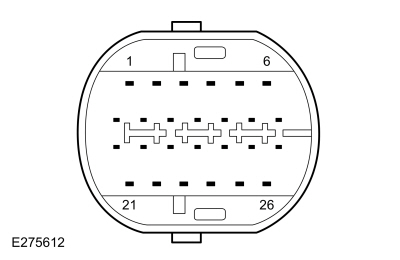 Transmission component side, pin 9
PINPOINT TEST B: TRANSMISSION FLUID TEMPERATURE SENSOR
Transmission component side, pin 9
PINPOINT TEST B: TRANSMISSION FLUID TEMPERATURE SENSOR|
Refer to Wiring Diagrams Cell 30 for schematic and connector information. Normal Operation and Fault Conditions The TFT sensor is a temperature dependent resistor that is in contact with transmission fluid in the transmission sump area. The PCM monitors the voltage drop across the TFT sensor, which changes as transmission fluid temperature varies. The PCM uses the TFT sensor signal as an input for its strategy for shifting and TCC operation. The PCM also uses the TFT sensor signal for transmission fault detection and diagnostics. DTC Fault Trigger Conditions
Possible Sources
|
|||||||||||||||||||||||||||||||||||||||||||
| B1 CHECK THE TFT (TRANSMISSION FLUID TEMPERATURE) SENSOR INPUT SIGNAL CIRCUIT | |||||||||||||||||||||||||||||||||||||||||||
Does the TFT PID display approximately -40°C and the TFTV PID display 4.96 to 5.10 volts?
|
|||||||||||||||||||||||||||||||||||||||||||
| B2 CHECK THE TFT (TRANSMISSION FLUID TEMPERATURE) SENSOR SIGNAL RETURN CIRCUIT | |||||||||||||||||||||||||||||||||||||||||||
Does the TFT PID display approximately 190°C and the TFTV PID display 0 volts?
|
|||||||||||||||||||||||||||||||||||||||||||
| B3 CHECK THE TFT (TRANSMISSION FLUID TEMPERATURE) SENSOR INPUT SIGNAL CIRCUIT FOR VOLTAGE | |||||||||||||||||||||||||||||||||||||||||||
Is the voltage between 4.8 and 5.1 volts?
|
|||||||||||||||||||||||||||||||||||||||||||
| B4 CHECK THE TFT (TRANSMISSION FLUID TEMPERATURE) SENSOR INPUT SIGNAL CIRCUIT FOR AN OPEN | |||||||||||||||||||||||||||||||||||||||||||
Is the resistance less than 3 ohms?
|
|||||||||||||||||||||||||||||||||||||||||||
| B5 CHECK THE TFT (TRANSMISSION FLUID TEMPERATURE) SENSOR INPUT SIGNAL CIRCUIT FOR A SHORT TO GROUND | |||||||||||||||||||||||||||||||||||||||||||
Is the resistance greater than 10,000 ohms?
|
|||||||||||||||||||||||||||||||||||||||||||
| B6 CHECK THE TFT (TRANSMISSION FLUID TEMPERATURE) SENSOR SIGNAL RETURN CIRCUIT FOR AN OPEN | |||||||||||||||||||||||||||||||||||||||||||
Is the resistance less than 3 ohms?
|
|||||||||||||||||||||||||||||||||||||||||||
| B7 CHECK THE TFT (TRANSMISSION FLUID TEMPERATURE) SENSOR SIGNAL RETURN CIRCUIT FOR A SHORT TO GROUND | |||||||||||||||||||||||||||||||||||||||||||
Is the resistance greater than 10,000 ohms?
|
|||||||||||||||||||||||||||||||||||||||||||
| B8 CHECK THE TFT (TRANSMISSION FLUID TEMPERATURE) SENSOR FOR AN OPEN AT THE TRANSMISSION BULKHEAD CONNECTOR | |||||||||||||||||||||||||||||||||||||||||||
Does the resistance match the specification on the temperature chart?
|
|||||||||||||||||||||||||||||||||||||||||||
| B9 CHECK TFT SENSOR RESISTANCE | |||||||||||||||||||||||||||||||||||||||||||
Does the resistance match the specification on the temperature chart?
|
|||||||||||||||||||||||||||||||||||||||||||
| B10 CHECK THE TFT (TRANSMISSION FLUID TEMPERATURE) SENSOR FOR A SHORT TO GROUND AT THE TRANSMISSION BULKHEAD CONNECTOR | |||||||||||||||||||||||||||||||||||||||||||
Are the resistances greater than 10,000 ohms?
|
|||||||||||||||||||||||||||||||||||||||||||
| B11 CHECK THE TFT SENSOR FOR A SHORT TO GROUND | |||||||||||||||||||||||||||||||||||||||||||
Are the resistances greater than 10,000 ohms?
|
|||||||||||||||||||||||||||||||||||||||||||
| B12 CHECK THE RESISTANCE OF THE ENTIRE TFT (TRANSMISSION FLUID TEMPERATURE) SENSOR CIRCUIT | |||||||||||||||||||||||||||||||||||||||||||
Does the resistance match the specification on the temperature chart?
|
 PINPOINT TEST C: TRANSMISSION RANGE SENSOR
|
Refer to Wiring Diagrams Cell 30 for schematic and connector information. Normal Operation and Fault Conditions Shift by Wire The TR sensor is comprised of a dual set of TR sensors. On Shift by Wire vehicles, the park system position is detected by reading TR sensors A and B. The PCM shifts the vehicle in and out of park and provides forward or reverse based on the position of the GSM shift knob. The 10R60 transmission uses dual PWM output (at 125 Hz) TR sensors where: TR sensor A increases as the park system is moved from Park to Out of Park and TR sensor B decreases as the park system is moved from Park to Out of Park, together the sum of the two signals should add up to 100%. DTC Fault Trigger Conditions
Possible Sources
|
||||||||||||||||||||||||||||||||||||
| C1 VERIFY THE DIAGNOSTIC TROUBLE CODES (DTCS) | ||||||||||||||||||||||||||||||||||||
Are TR sensor DTC s present?
|
||||||||||||||||||||||||||||||||||||
| C2 CHECK THE TR (TRANSMISSION RANGE) SENSOR OPERATION | ||||||||||||||||||||||||||||||||||||
Are the TR_A_DC and TR_B_DC duty cycles within range and do both remain steady when the harness is wiggled or the vehicle is driven?
|
||||||||||||||||||||||||||||||||||||
| C3 CHECK THE TR (TRANSMISSION RANGE) SENSOR SIGNAL CIRCUITS FOR VOLTAGE | ||||||||||||||||||||||||||||||||||||
Are the voltages approximately 5 volts?
|
||||||||||||||||||||||||||||||||||||
| C4 CHECK THE TR (TRANSMISSION RANGE) SENSOR VREF CIRCUIT FOR VOLTAGE | ||||||||||||||||||||||||||||||||||||
Is the voltage approximately 9 volts?
|
||||||||||||||||||||||||||||||||||||
| C5 CHECK THE TR (TRANSMISSION RANGE) SENSOR VREF AND SIGNAL CIRCUITS FOR AN OPEN | ||||||||||||||||||||||||||||||||||||
Are the resistances less than 3 ohms?
|
||||||||||||||||||||||||||||||||||||
| C6 CHECK THE TR (TRANSMISSION RANGE) SENSOR VREF AND SIGNAL CIRCUITS FOR A SHORT TO GROUND | ||||||||||||||||||||||||||||||||||||
Are the resistances greater than 10,000 ohms?
|
||||||||||||||||||||||||||||||||||||
| C7 CHECK THE TR (TRANSMISSION RANGE) SENSOR GROUND CIRCUIT | ||||||||||||||||||||||||||||||||||||
Is the voltage approximately 9 volts?
|
||||||||||||||||||||||||||||||||||||
| C8 CHECK THE TR (TRANSMISSION RANGE) SENSOR GROUND CIRCUIT FOR AN OPEN | ||||||||||||||||||||||||||||||||||||
Is the resistance less than 3 ohms?
|
||||||||||||||||||||||||||||||||||||
| C9 CHECK THE TRANSMISSION INTERNAL WIRING HARNESS TR (TRANSMISSION RANGE) SENSOR CIRCUITS FOR AN OPEN | ||||||||||||||||||||||||||||||||||||
Are the resistances less than 3 ohms?
|
||||||||||||||||||||||||||||||||||||
| C10 CHECK THE TRANSMISSION INTERNAL WIRING HARNESS TR (TRANSMISSION RANGE) SENSOR CIRCUITS FOR A SHORT TO GROUND | ||||||||||||||||||||||||||||||||||||
Are the resistances greater than 10,000 ohms?
|
||||||||||||||||||||||||||||||||||||
| C11 CHECK THE TR (TRANSMISSION RANGE) SENSOR SIGNAL CIRCUITS FOR VOLTAGE THROUGH THE BULKHEAD CONNECTOR | ||||||||||||||||||||||||||||||||||||
Are the voltages approximately 5 volts?
|
||||||||||||||||||||||||||||||||||||
| C12 CHECK THE TR (TRANSMISSION RANGE) SENSOR VREF CIRCUIT FOR VOLTAGE THROUGH THE BULKHEAD CONNECTOR | ||||||||||||||||||||||||||||||||||||
Is the voltage approximately 9 volts?
|
||||||||||||||||||||||||||||||||||||
| C13 CHECK THE TR (TRANSMISSION RANGE) SENSOR GROUND CIRCUIT THROUGH THE BULKHEAD CONNECTOR | ||||||||||||||||||||||||||||||||||||
Is the voltage approximately 9 volts?
|
||||||||||||||||||||||||||||||||||||
PINPOINT TEST D: TSS, OSS, ISSA, ISSB SENSORS (ELECTRICAL)|
Refer to Wiring Diagrams Cell 30 for schematic and connector information. Normal Operation and Fault Conditions TSS Sensor The TSS sensor is a Hall-effect type sensor that provides a signal to the PCM that changes in frequency as the rotating speed of the planetary carrier No. 2 varies. The PCM compares the TSS sensor signal with the engine speed information to determine the amount of slip occurring in the torque converter. The PCM also compares the TSS sensor signal with the OSS sensor signal to determine the gear ratio provided by the planetary carrier No. 4. The PCM uses the TSS sensor signal as an input for its strategies for shifts, TCC operation and for transmission fault detection and diagnostics. OSS Sensor The OSS sensor is a Hall-effect type sensor that provides a signal to the PCM that changes in frequency as the rotating speed of the rear planetary carrier No. 4 varies. The PCM compares the OSS sensor signal with the TSS sensor signal to determine the gear ratio provided by the rear planetary gearset. The PCM also uses the OSS sensor signal as an input for its strategies for shifts, TCC operation and for transmission fault detection and diagnostics. Intermediate Shaft Speed A and B Sensors The Intermediate Shaft Speed A (ISSA) and B (ISSB) sensors are Hall-effect type sensors that provide a signal to the PCM that changes in frequency as the rotating speed of the component being monitored changes. ISSA monitors the speed and rotational direction of ring gear 1 and ISSB monitors the speed and rotational direction of planetary carrier-1/ring gear 4. The Intermediate shaft speed sensors are used to monitor clutch states for transmission fault detection and diagnostics. DTC Fault Trigger Conditions
Possible Sources
|
||||||||||||||||||||||||||||||||||||||||||||||||||||||||||||||||||||||||||||||||||||||||||||||||||||||||||||||||||||||||||||||||||||||||
| D1 CHECK THE SENSOR VREF CIRCUIT FOR VOLTAGE | ||||||||||||||||||||||||||||||||||||||||||||||||||||||||||||||||||||||||||||||||||||||||||||||||||||||||||||||||||||||||||||||||||||||||
|
NOTE: This pinpoint test is written to address all speed sensor electrical faults. For each test step, only the circuits related to the DTC retrieved during the KOEO test need to be tested.
Is the voltage approximately 9 volts on the suspect circuit?
|
||||||||||||||||||||||||||||||||||||||||||||||||||||||||||||||||||||||||||||||||||||||||||||||||||||||||||||||||||||||||||||||||||||||||
| D2 CHECK THE SENSOR VREF CIRCUIT FOR A SHORT TO GROUND | ||||||||||||||||||||||||||||||||||||||||||||||||||||||||||||||||||||||||||||||||||||||||||||||||||||||||||||||||||||||||||||||||||||||||
Is the resistance greater than 10,000 ohms on the suspect circuit?
|
||||||||||||||||||||||||||||||||||||||||||||||||||||||||||||||||||||||||||||||||||||||||||||||||||||||||||||||||||||||||||||||||||||||||
| D3 CHECK THE SENSOR VREF CIRCUIT FOR AN OPEN | ||||||||||||||||||||||||||||||||||||||||||||||||||||||||||||||||||||||||||||||||||||||||||||||||||||||||||||||||||||||||||||||||||||||||
Is the resistance less than 3 ohms on the suspect circuit?
|
||||||||||||||||||||||||||||||||||||||||||||||||||||||||||||||||||||||||||||||||||||||||||||||||||||||||||||||||||||||||||||||||||||||||
| D4 CHECK THE SENSOR SIGNAL RETURN CIRCUIT FOR AN OPEN | ||||||||||||||||||||||||||||||||||||||||||||||||||||||||||||||||||||||||||||||||||||||||||||||||||||||||||||||||||||||||||||||||||||||||
Is the resistance less than 3 ohms on the suspect circuit?
|
||||||||||||||||||||||||||||||||||||||||||||||||||||||||||||||||||||||||||||||||||||||||||||||||||||||||||||||||||||||||||||||||||||||||
| D5 CHECK THE SENSOR SIGNAL RETURN CIRCUIT FOR A SHORT TO GROUND | ||||||||||||||||||||||||||||||||||||||||||||||||||||||||||||||||||||||||||||||||||||||||||||||||||||||||||||||||||||||||||||||||||||||||
Is the resistance greater than 10,000 ohms on the suspect circuit?
|
||||||||||||||||||||||||||||||||||||||||||||||||||||||||||||||||||||||||||||||||||||||||||||||||||||||||||||||||||||||||||||||||||||||||
| D6 CHECK THE SENSOR SIGNAL RETURN CIRCUIT FOR A SHORT TOGETHER WITH THE TRANSMISSION POWER CIRCUITS | ||||||||||||||||||||||||||||||||||||||||||||||||||||||||||||||||||||||||||||||||||||||||||||||||||||||||||||||||||||||||||||||||||||||||
Are the resistances greater than 10,000 ohms on the suspect circuit?
|
||||||||||||||||||||||||||||||||||||||||||||||||||||||||||||||||||||||||||||||||||||||||||||||||||||||||||||||||||||||||||||||||||||||||
| D7 CHECK THE TRANSMISSION INTERNAL WIRING HARNESS SENSOR VREF CIRCUIT FOR AN OPEN | ||||||||||||||||||||||||||||||||||||||||||||||||||||||||||||||||||||||||||||||||||||||||||||||||||||||||||||||||||||||||||||||||||||||||
Is the resistance less than 3 ohms on the suspect circuit?
|
||||||||||||||||||||||||||||||||||||||||||||||||||||||||||||||||||||||||||||||||||||||||||||||||||||||||||||||||||||||||||||||||||||||||
| D8 CHECK THE TRANSMISSION INTERNAL WIRING HARNESS SENSOR VREF CIRCUIT FOR A SHORT TO GROUND | ||||||||||||||||||||||||||||||||||||||||||||||||||||||||||||||||||||||||||||||||||||||||||||||||||||||||||||||||||||||||||||||||||||||||
Is the resistance greater than 10,000 ohms on the suspect circuit?
|
||||||||||||||||||||||||||||||||||||||||||||||||||||||||||||||||||||||||||||||||||||||||||||||||||||||||||||||||||||||||||||||||||||||||
| D9 CHECK THE TRANSMISSION INTERNAL WIRING HARNESS SENSOR SIGNAL RETURN CIRCUIT FOR AN OPEN | ||||||||||||||||||||||||||||||||||||||||||||||||||||||||||||||||||||||||||||||||||||||||||||||||||||||||||||||||||||||||||||||||||||||||
Is the resistance less than 3 ohms on the suspect circuit?
|
||||||||||||||||||||||||||||||||||||||||||||||||||||||||||||||||||||||||||||||||||||||||||||||||||||||||||||||||||||||||||||||||||||||||
| D10 CHECK THE TRANSMISSION INTERNAL WIRING HARNESS SENSOR SIGNAL RETURN CIRCUIT FOR A SHORT TO GROUND | ||||||||||||||||||||||||||||||||||||||||||||||||||||||||||||||||||||||||||||||||||||||||||||||||||||||||||||||||||||||||||||||||||||||||
Is the resistance greater than 10,000 ohms on the suspect circuit?
|
||||||||||||||||||||||||||||||||||||||||||||||||||||||||||||||||||||||||||||||||||||||||||||||||||||||||||||||||||||||||||||||||||||||||
| D11 CHECK THE SENSOR SIGNAL RETURN CIRCUIT FOR AN OPEN WITH THE TRANSMISSION CONNECTED | ||||||||||||||||||||||||||||||||||||||||||||||||||||||||||||||||||||||||||||||||||||||||||||||||||||||||||||||||||||||||||||||||||||||||
Is the resistance less than 3 ohms on the suspect circuit?
|
||||||||||||||||||||||||||||||||||||||||||||||||||||||||||||||||||||||||||||||||||||||||||||||||||||||||||||||||||||||||||||||||||||||||
| D12 CHECK THE SENSOR VREF CIRCUIT FOR VOLTAGE AT THE SENSOR | ||||||||||||||||||||||||||||||||||||||||||||||||||||||||||||||||||||||||||||||||||||||||||||||||||||||||||||||||||||||||||||||||||||||||
Are the voltages 8.0 to 9.2 volts?
|
PINPOINT TEST E: DTCS P0C28, P0C29, P0C2A, P0C2C, P0C2D, P0C2E, P2796|
Refer to Wiring Diagrams Cell 30 for schematic and connector information. Normal Operation and Fault Conditions The transmission fluid auxiliary pump keeps the transmission engaged when the engine is stopped and the transmission is in drive. The transmission fluid auxiliary pump has an internal microprocessor and communicates with the PCM over a PWM circuit with a frequency of 150 Hz and a duty cycle range of 10% to 90%. DTC Fault Trigger Conditions
Possible Sources
|
||||||||||||||||||||||||
| E1 CHECK THE TRANSMISSION FLUID LEVEL | ||||||||||||||||||||||||
Is the transmission fluid level correct?
|
||||||||||||||||||||||||
| E2 CHECK THE TRANSMISSION FLUID AUXILIARY PUMP VPWR CIRCUIT FOR VOLTAGE | ||||||||||||||||||||||||
Is the voltage greater than 11 volts?
|
||||||||||||||||||||||||
| E3 CHECK THE TRANSMISSION FLUID AUXILIARY PUMP TASV CIRCUIT FOR VOLTAGE | ||||||||||||||||||||||||
Is the voltage greater than 11 volts?
|
||||||||||||||||||||||||
| E4 CHECK THE TRANSMISSION FLUID AUXILIARY PUMP TASV CIRCUIT FOR AN OPEN | ||||||||||||||||||||||||
Is the resistance less than 3 ohms?
|
||||||||||||||||||||||||
| E5 CHECK THE TRANSMISSION FLUID AUXILIARY PUMP TASV CIRCUIT FOR A SHORT TO GROUND | ||||||||||||||||||||||||
Is the resistance greater than 10,000 ohms?
|
||||||||||||||||||||||||
| E6 CHECK THE TRANSMISSION FLUID AUXILIARY PUMP GROUND CIRCUIT FOR AN OPEN | ||||||||||||||||||||||||
Is the resistance less than 3 ohms?
|
||||||||||||||||||||||||
| E7 CHECK THE TRANSMISSION FLUID AUXILIARY PUMP ATFPC AND ATFPM CIRCUITS FOR AN OPEN | ||||||||||||||||||||||||
Are the resistances less than 3 ohms?
|
||||||||||||||||||||||||
| E8 CHECK THE TRANSMISSION FLUID AUXILIARY PUMP ATFPC AND ATFPM CIRCUITS FOR A SHORT TO GROUND | ||||||||||||||||||||||||
Are the resistances greater than 10,000 ohms?
|
||||||||||||||||||||||||
| E9 CHECK THE TRANSMISSION CASE WIRING HARNESS ATFPC AND ATFPM CIRCUITS FOR AN OPEN | ||||||||||||||||||||||||
Are the resistances less than 3 ohms?
|
||||||||||||||||||||||||
| E10 CHECK THE TRANSMISSION CASE WIRING HARNESS ATFPC AND ATFPM CIRCUITS FOR A SHORT TO GROUND | ||||||||||||||||||||||||
Are the resistances greater than 10,000 ohms?
|
||||||||||||||||||||||||
| E11 CHECK THE TRANSMISSION CASE WIRING HARNESS TRANSMISSION FLUID AUXILIARY PUMP POWER CIRCUITS | ||||||||||||||||||||||||
Are the voltages greater than 11 volts?
|
||||||||||||||||||||||||
| E12 CHECK THE TRANSMISSION INTERNAL WIRING HARNESS TRANSMISSION FLUID AUXILIARY PUMP GROUND CIRCUIT | ||||||||||||||||||||||||
Is the voltage greater than 11 volts?
|
PINPOINT TEST F: DTCS P0B0D, P0C27, P175A|
Refer to Wiring Diagrams Cell 30 for schematic and connector information. Normal Operation and Fault Conditions The transmission fluid auxiliary pump keeps the transmission fluid circulating during auto start-stop events. The transmission fluid auxiliary pump has an internal microprocessor and communicates with the PCM over a PWM circuit with a frequency of 150 Hz with a duty cycle range of 10% to 90%. If the transmission fluid level is low or overfilled or there are any restrictions in the transmission lines, hoses (if vehicle is equipped with external lines or hoses) or cooler it may affect the transmission fluid auxiliary pump operation. DTC Fault Trigger Conditions
Possible Sources
|
||||||||||||
| F1 CHECK THE TRANSMISSION FLUID LEVEL | ||||||||||||
Is the transmission fluid level correct?
|
||||||||||||
| F2 CHECK THE PCM (POWERTRAIN CONTROL MODULE) FOR DIAGNOSTIC TROUBLE CODES (DTCS) | ||||||||||||
Are DTC s P0B0D, P0C27 and/or P175A present?
|
||||||||||||
| F3 RECHECK FOR DTC P0B0D | ||||||||||||
Is DTC P0B0D present?
|
||||||||||||
| F4 RECHECK FOR DTC P0C27 | ||||||||||||
Is DTC P0C27 present?
|
||||||||||||
| F5 CHECK THE TRANSMISSION FLUID AUXILIARY PUMP SEALS | ||||||||||||
Are the transmission fluid pump seals OK?
|
||||||||||||
| F6 CHECK FOR TRANSMISSION OVER TEMPERATURE DTCS | ||||||||||||
Are DTC s P0218 and/or P1783 present?
|
||||||||||||
| F7 RECHECK FOR DTC P175A | ||||||||||||
Is DTC P175A present?
|
PINPOINT TEST G: TCC, LPC SOLENOIDS|
Refer to Wiring Diagrams Cell 30 for schematic and connector information. Normal Operation and Fault Conditions The TCC is controlled by a directly proportional solenoid. Transmission line pressure is controlled by an inversely proportional solenoid (0 current = max pressure, max current = min line pressure). The TCC and LPC solenoids are controlled by smart drivers capable of detecting open, short to ground or short to power faults. In the event of an open circuit or short to power fault the TCC circuit is failed open. The TCC and LPC solenoids share a high side driver. Anytime power is removed the transmission defaults to MAX line pressure with the TCC released. DTC Fault Trigger Conditions
Possible Sources
|
||||||||||||||||||||||||||||||||||||||||||||||||||||||||||||||||||||||
| G1 CHECK THE TRANSMISSION SOLENOID POWER CONTROL 2 (TSPC2) CIRCUIT FOR VOLTAGE | ||||||||||||||||||||||||||||||||||||||||||||||||||||||||||||||||||||||
|
NOTE: This pinpoint test is written to address both TCC solenoid and LPC solenoid electrical faults. For each test step, only the circuits related to the DTC retrieved during the KOEO test need to be tested.
Is the maximum recorded voltage greater than 11 volts?
|
||||||||||||||||||||||||||||||||||||||||||||||||||||||||||||||||||||||
| G2 CHECK THE TRANSMISSION SOLENOID POWER CONTROL 2 (TSPC2) CIRCUIT FOR AN OPEN | ||||||||||||||||||||||||||||||||||||||||||||||||||||||||||||||||||||||
Is the resistance less than 3 ohms?
|
||||||||||||||||||||||||||||||||||||||||||||||||||||||||||||||||||||||
| G3 CHECK THE TRANSMISSION SOLENOID POWER CONTROL 2 (TSPC2) CIRCUIT FOR A SHORT TO GROUND | ||||||||||||||||||||||||||||||||||||||||||||||||||||||||||||||||||||||
Is the resistance greater than 10,000 ohms?
|
||||||||||||||||||||||||||||||||||||||||||||||||||||||||||||||||||||||
| G4 CHECK THE SOLENOID CONTROL CIRCUIT FOR AN OPEN | ||||||||||||||||||||||||||||||||||||||||||||||||||||||||||||||||||||||
Is the resistance less than 3 ohms on the suspect circuit?
|
||||||||||||||||||||||||||||||||||||||||||||||||||||||||||||||||||||||
| G5 CHECK THE SOLENOID CONTROL CIRCUIT FOR A SHORT TO GROUND | ||||||||||||||||||||||||||||||||||||||||||||||||||||||||||||||||||||||
Is the resistance greater than 10,000 ohms on the suspect circuit?
|
||||||||||||||||||||||||||||||||||||||||||||||||||||||||||||||||||||||
| G6 CHECK THE SOLENOID CONTROL CIRCUITS FOR A SHORT TO THE TRANSMISSION POWER CIRCUITS | ||||||||||||||||||||||||||||||||||||||||||||||||||||||||||||||||||||||
Are the resistances greater than 10,000 ohms on the suspect circuit?
|
||||||||||||||||||||||||||||||||||||||||||||||||||||||||||||||||||||||
| G7 CHECK THE TRANSMISSION INTERNAL WIRING HARNESS CIRCUITS FOR AN OPEN | ||||||||||||||||||||||||||||||||||||||||||||||||||||||||||||||||||||||
Are the resistances less than 3 ohms on the suspect circuits?
|
||||||||||||||||||||||||||||||||||||||||||||||||||||||||||||||||||||||
| G8 CHECK THE TRANSMISSION INTERNAL WIRING HARNESS CIRCUITS FOR A SHORT TO GROUND | ||||||||||||||||||||||||||||||||||||||||||||||||||||||||||||||||||||||
Are the resistances greater than 10,000 ohms on the suspect circuits?
|
||||||||||||||||||||||||||||||||||||||||||||||||||||||||||||||||||||||
| G9 CHECK THE SOLENOID RESISTANCE | ||||||||||||||||||||||||||||||||||||||||||||||||||||||||||||||||||||||
Is the solenoid resistance within specification?
|
||||||||||||||||||||||||||||||||||||||||||||||||||||||||||||||||||||||
| G10 CHECK THE SOLENOID FOR A SHORT TO GROUND | ||||||||||||||||||||||||||||||||||||||||||||||||||||||||||||||||||||||
Is the resistance greater than 10,000 ohms?
|
||||||||||||||||||||||||||||||||||||||||||||||||||||||||||||||||||||||
| G11 CHECK THE SENSOR SIGNAL RETURN CIRCUIT FOR AN OPEN WITH THE TRANSMISSION CONNECTED | ||||||||||||||||||||||||||||||||||||||||||||||||||||||||||||||||||||||
Is the resistance less than 3 ohms on the suspect circuit?
|
||||||||||||||||||||||||||||||||||||||||||||||||||||||||||||||||||||||
| G12 CHECK THE TRANSMISSION SOLENOID POWER CONTROL 2 (TSPC2) CIRCUIT FOR VOLTAGE AT THE SOLENOID | ||||||||||||||||||||||||||||||||||||||||||||||||||||||||||||||||||||||
Is the voltage greater than 11 volts on the suspect circuit?
|
PINPOINT TEST H: PARK LOCK PAWL SOLENOID|
Refer to Wiring Diagrams Cell 29 for schematic and connector information. Normal Operation and Fault Conditions The park lock pawl solenoid locks the park lock pawl valve in place when energized, either in the park position or the out of the park position. The park lock pawl solenoid pin is extended when voltage is applied to it and retracted when the voltage is not applied. This solenoid is used during stop start events to keep the vehicle out of park. DTC Fault Trigger Conditions
Possible Sources
|
|||||||||||||||||||||
| H1 RETRIEVE AND RECORD ALL DIAGNOSTIC TROUBLE CODES (DTCS) | |||||||||||||||||||||
Are diagnostic trouble codes (DTCs) P07E4, P07E6, P2888, P2889, P288A, P288B present?
|
|||||||||||||||||||||
| H2 CONFIRM PARK IS NOT MANUALLY OVERRIDDEN | |||||||||||||||||||||
Does the PID TR_PARK_STAT indicate the transmission is in mechanical Park override?
|
|||||||||||||||||||||
| H3 CHECK THE PARK LOCK PAWL SOLENOID TASV CIRCUIT FOR POWER | |||||||||||||||||||||
Is the voltage greater than 11 volts?
|
|||||||||||||||||||||
| H4 CHECK THE PARK LOCK PAWL SOLENOID TASV CIRCUIT FOR AN OPEN | |||||||||||||||||||||
Is the resistance less than 3 ohms?
|
|||||||||||||||||||||
| H5 CHECK THE PARK LOCK PAWL SOLENOID TASV CIRCUIT FOR A SHORT TO GROUND | |||||||||||||||||||||
Is the resistance greater than 10, 000 ohms?
|
|||||||||||||||||||||
| H6 CHECK THE PARK LOCK PAWL SOLENOID CONTROL CIRCUIT FOR AN OPEN | |||||||||||||||||||||
Is the resistance less than 3 ohms?
|
|||||||||||||||||||||
| H7 CHECK THE PARK LOCK PAWL SOLENOID CONTROL CIRCUIT FOR A SHORT TO GROUND | |||||||||||||||||||||
Is the resistance greater than 10,000 ohms?
|
|||||||||||||||||||||
| H8 CHECK THE TRANSMISSION INTERNAL WIRING HARNESS FOR AN OPEN | |||||||||||||||||||||
Are the resistances less than 3 ohms?
|
|||||||||||||||||||||
| H9 CHECK THE TRANSMISSION INTERNAL WIRING HARNESS FOR A SHORT TO GROUND | |||||||||||||||||||||
Are the resistances greater than 10,000 ohms?
|
|||||||||||||||||||||
| H10 CHECK THE TRANSMISSION LINE PRESSURE | |||||||||||||||||||||
Is the transmission line pressure within specification?
|
|||||||||||||||||||||
| H11 CHECK PARK LOCK PAWL SOLENOID OPERATION | |||||||||||||||||||||
Does the park lock pawl solenoid pin resist motion with the ignition ON and move with the ignition OFF?
|
PINPOINT TEST I: OSS, TSS, ISSA, ISSB SENSOR (PERFORMANCE)|
Refer to Wiring Diagrams Cell 30 for schematic and connector information. Normal Operation and Fault Conditions TSS Sensor The TSS sensor is a Hall-effect type sensor that provides a signal to the PCM that changes in frequency as the rotating speed of the planetary carrier No. 2 varies. The PCM compares the TSS sensor signal with the engine speed information to determine the amount of slip occurring in the torque converter. The PCM also compares the TSS sensor signal with the OSS sensor signal to determine the gear ratio provided by the planetary carrier No. 4. The PCM uses the TSS sensor signal as an input for its shift strategies and TCC operation. The PCM also uses the TSS sensor signal for transmission fault detection and diagnostics. OSS Sensor The OSS sensor is a Hall-effect type sensor that provides a signal to the PCM that changes in frequency as the rotating speed of the rear planetary carrier No. 4 varies. The PCM also compares the OSS sensor signal with the TSS sensor signal to determine the gear ratio provided by the rear planetary gearset. The PCM uses the OSS sensor signal as an input for its shift strategies and TCC operation. The PCM also uses the OSS sensor signal for transmission fault detection and diagnostics. Intermediate Speed Sensors A and B The Intermediate Speed Sensors A (ISSA) and B (ISSB) are Hall-effect type sensors that provide a signal to the PCM that changes in frequency as the rotating speed of the component being monitored changes. ISSA monitors the speed and rotational direction of ring gear 1 and ISSB monitors the speed and rotational direction of planetary carrier-1/ring gear 4. The Intermediate speed sensors are used to monitor clutch states for transmission fault detection and diagnostics. DTC Fault Trigger Conditions
Possible Sources
|
|||||||||||||||
| I1 CHECK FOR DIAGNOSTIC TROUBLE CODES (DTCS) | |||||||||||||||
Is P0716, P0721, P0792 and/or P2746 present?
|
|||||||||||||||
| I2 CHECK THE TSS SENSOR | |||||||||||||||
Were any issues found?
|
|||||||||||||||
| I3 CHECK THE OSS SENSOR | |||||||||||||||
Were any issues found?
|
|||||||||||||||
| I4 CHECK THE INTERMEDIATE SHAFT SPEED A (ISSA) SENSOR | |||||||||||||||
Were any issues found?
|
|||||||||||||||
| I5 CHECK INTERMEDIATE SHAFT SPEED B (ISSB) SENSOR | |||||||||||||||
Were any issues found?
|
PINPOINT TEST J: DTC P0702, P0882, P0883, P0884, P1397|
Refer to Wiring Diagrams Cell 25 for schematic and connector information. Normal Operation and Fault Conditions The PCM monitors the supplied voltage and sets a DTC if the voltage rises above or falls below threshold. DTC Fault Trigger Conditions
Possible Sources
|
||||||||||||||||||
| J1 RECHECK FOR THE VOLTAGE FAULTDTC (DIAGNOSTIC TROUBLE CODE) IN THE PCM (POWERTRAIN CONTROL MODULE) | ||||||||||||||||||
Is DTC P0702, P0882, P0883 and/or P1397 still present?
|
PINPOINT TEST K: DTC P0729|
Normal Operation and Fault Conditions The PCM monitors clutch applications for all gears. It sets a DTC if it detects ratio errors but is unable to detect which clutch caused the issue. The transmission logic disables the gear in question. If multiple incorrect gear ratio diagnostic trouble codes (DTCs) are set, look for a common clutch involved in the operation of those gear applications. If no common clutch errors are found, look for line pressure or pump pressure issues. DTC Fault Trigger Conditions
Possible Sources
|
||||||
| K1 CHECK FOR DIAGNOSTIC TROUBLE CODES (DTCS) | ||||||
Is DTC P0729 present in the PCM ?
|
PINPOINT TEST L: DTC P0731|
Normal Operation and Fault Conditions The PCM monitors clutch applications for all gears. It sets a DTC if it detects ratio errors but is unable to detect which clutch caused the issue. The transmission logic disables the gear in question. If multiple incorrect gear ratio DTC s are set, look for a common clutch involved in the operation of those gear applications. If no common clutch errors are found, look for line pressure or pump pressure issues. DTC Fault Trigger Conditions
Possible Sources
|
||||||
| L1 CHECK FOR DIAGNOSTIC TROUBLE CODES (DTCS) | ||||||
Is DTC P0731 present in the PCM ?
|
PINPOINT TEST M: DTC P0732|
Normal Operation and Fault Conditions The PCM monitors clutch applications for all gears. It sets a DTC if it detects ratio errors but is unable to detect which clutch caused the issue. The transmission logic disables the gear in question. If multiple incorrect gear ratio DTC s are set, look for a common clutch involved in the operation of those gear applications. If no common clutch errors are found, look for line pressure or pump pressure issues. DTC Fault Trigger Conditions
Possible Sources
|
||||||
| M1 CHECK FOR DIAGNOSTIC TROUBLE CODES (DTCS) | ||||||
Is DTC P0732 present in the PCM ?
|
PINPOINT TEST N: DTC P0733|
Normal Operation and Fault Conditions The PCM monitors clutch applications for all gears. It sets a DTC if it detects ratio errors but is unable to detect which clutch caused the issue. The transmission logic disables the gear in question. If multiple incorrect gear ratio DTC s are set, look for a common clutch involved in the operation of those gear applications. If no common clutch errors are found, look for line pressure or pump pressure issues. DTC Fault Trigger Conditions
Possible Sources
|
||||||
| N1 CHECK FOR DIAGNOSTIC TROUBLE CODES (DTCS) | ||||||
Is DTC P0733 present in the PCM ?
|
PINPOINT TEST O: DTC P0734|
Normal Operation and Fault Conditions The PCM monitors clutch applications for all gears. It sets a DTC if it detects ratio errors but is unable to detect which clutch caused the issue. The transmission logic disables the gear in question. If multiple incorrect gear ratio DTC s are set, look for a common clutch involved in the operation of those gear applications. If no common clutch errors are found, look for line pressure or pump pressure issues. DTC Fault Trigger Conditions
Possible Sources
|
||||||
| O1 CHECK FOR DIAGNOSTIC TROUBLE CODES (DTCS) | ||||||
Is DTC P0734 present in the PCM ?
|
PINPOINT TEST P: DTC P0735|
Normal Operation and Fault Conditions The PCM monitors clutch applications for all gears. It sets a DTC if it detects ratio errors but is unable to detect which clutch caused the issue. The transmission logic disables the gear in question. If multiple incorrect gear ratio DTC s are set, look for a common clutch involved in the operation of those gear applications. If no common clutch errors are found, look for line pressure or pump pressure issues. DTC Fault Trigger Conditions
Possible Sources
|
||||||
| P1 CHECK FOR DIAGNOSTIC TROUBLE CODES (DTCS) | ||||||
Is DTC P0735 present in the PCM ?
|
PINPOINT TEST Q: DTC P0736|
Normal Operation and Fault Conditions The PCM monitors clutch applications for all gears. It sets a DTC if it detects ratio errors but is unable to detect which clutch caused the issue. The transmission logic disables the gear in question. If multiple incorrect gear ratio DTC s are set, look for a common clutch involved in the operation of those gear applications. If no common clutch errors are found, look for line pressure or pump pressure issues. DTC Fault Trigger Conditions
Possible Sources
|
||||||
| Q1 CHECK FOR DIAGNOSTIC TROUBLE CODES (DTCS) | ||||||
Is DTC P0735 present in the PCM ?
|
PINPOINT TEST R: DTC P0741, P0751, P0756, P0761, P0766, P0771, P1744, P2707|
Normal Operation and Fault Conditions The PCM monitors clutch applications. It sets a DTC if it detects a non-electrical fault that caused a clutch to fail to apply. DTC Fault Trigger Conditions
Possible Sources
|
|||||||||||||||||||||||||||
| R1 CHECK FOR DIAGNOSTIC TROUBLE CODES (DTCS) | |||||||||||||||||||||||||||
Is DTC P0741, P0751, P0756, P0761, P0766, P0771, P1744, and/or P2707 present in the PCM ?
|
PINPOINT TEST S: DTC P0752, P0757, P0762, P0767, P0772, P2708, P2758, P2783|
Normal Operation and Fault Conditions The PCM monitors clutch applications. It sets a DTC if it detects a non-electrical fault that causes a clutch to fail to release. DTC Fault Trigger Conditions
Possible Sources
|
|||||||||||||||||||||||||||
| S1 CHECK FOR DIAGNOSTIC TROUBLE CODES (DTCS) | |||||||||||||||||||||||||||
Is DTC P0752, P0757, P0762, P0767, P0772, P2708, P2758 and/or P2783 present in the PCM ?
|
PINPOINT TEST T: DTC P076F|
Normal Operation and Fault Conditions The PCM monitors clutch applications for all gears. It sets a DTC if it detects ratio errors but is unable to detect which clutch caused the issue. The transmission logic disables the gear in question. If multiple incorrect gear ratio DTC s are set, look for a common clutch involved in the operation of those gear applications. If no common clutch errors are found, look for line pressure or pump pressure issues. DTC Fault Trigger Conditions
Possible Sources
|
||||||
| T1 CHECK FOR DIAGNOSTIC TROUBLE CODES (DTCS) | ||||||
Is DTC P076F present in the PCM ?
|
PINPOINT TEST U: DTC P07D9|
Normal Operation and Fault Conditions The PCM monitors clutch applications for all gears. It sets a DTC if it detects ratio errors but is unable to detect which clutch caused the issue. The transmission logic disables the gear in question. If multiple incorrect gear ratio DTC s are set, look for a common clutch involved in the operation of those gear applications. If no common clutch errors are found, look for line pressure or pump pressure issues. DTC Fault Trigger Conditions
Possible Sources
|
||||||
| U1 CHECK FOR DIAGNOSTIC TROUBLE CODES (DTCS) | ||||||
Is DTC P07D9 present in the PCM ?
|
PINPOINT TEST V: DTC P07F6|
Normal Operation and Fault Conditions The PCM monitors clutch applications for all gears. It sets a DTC if it detects ratio errors but is unable to detect which clutch caused the issue. The transmission logic disables the gear in question. If multiple incorrect gear ratio DTC s are set, look for a common clutch involved in the operation of those gear applications. If no common clutch errors are found, look for line pressure or pump pressure issues. DTC Fault Trigger Conditions
Possible Sources
|
||||||
| V1 CHECK FOR DIAGNOSTIC TROUBLE CODES (DTCS) | ||||||
Is DTC P07F6 present in the PCM ?
|
PINPOINT TEST W: DTC P07F7|
Normal Operation and Fault Conditions The PCM monitors clutch applications for all gears. It sets a DTC if it detects ratio errors but is unable to detect which clutch caused the issue. The transmission logic disables the gear in question. If multiple incorrect gear ratio DTC s are set, look for a common clutch involved in the operation of those gear applications. If no common clutch errors are found, look for line pressure or pump pressure issues. DTC Fault Trigger Conditions
Possible Sources
|
||||||
| W1 CHECK FOR DIAGNOSTIC TROUBLE CODES (DTCS) | ||||||
Is DTC P07F7 present in the PCM ?
|
PINPOINT TEST X: DTC P0868|
Normal Operation and Fault Conditions The PCM monitors clutch applications for all gears. It sets a DTC for low transmission fluid pressure if multiple clutches do not properly apply. DTC Fault Trigger Conditions
Possible Sources
|
||||||
| X1 CHECK FOR DIAGNOSTIC TROUBLE CODES (DTCS) | ||||||
Is DTC P0735 present in the PCM ?
|
PINPOINT TEST Y: DTC P1636, P163E, P163F|
Normal Operation and Fault Conditions All CIDAS shift solenoids are calibrated from the factory, but not all solenoids are the same. Each solenoid is labelled with a band number, and each main control valve body has a 13-digit solenoid body strategy and a 12-digit solenoid body identification. This information must be downloaded into the PCM , or harsh shifts will occur. DTC Fault Trigger Conditions
Possible Sources
|
||||||||||||
| Y1 UPDATE THE PCM (POWERTRAIN CONTROL MODULE) CALIBRATION AND TRANSMISSION STRATEGY | ||||||||||||
Is DTC P1636, P163E or P163F present in the PCM ?
|
PINPOINT TEST Z: P1706|
NOTE: The park pawl can be damaged by ratcheting too many times. Once the root cause of P1706 has been identified and repaired, the park pawl must be inspected to make sure it is free of damage and still capable of holding the vehicle. Normal Operation and Fault Conditions If park is engaged while the vehicle is moving, the park pawl will ratchet on the teeth of planetary carrier assembly No. 4. The PCM monitors the park system position using the TR sensor. If the TR sensor shows the transmission is in park while the vehicle is moving, a DTC will set. DTC Fault Trigger Conditions
Possible Sources
|
||||||
| Z1 CHECK THE PCM (POWERTRAIN CONTROL MODULE) FOR DIAGNOSTIC TROUBLE CODES (DTCS) | ||||||
Are any power supply, internal module, TR sensor, clutch fault, or gear engagement fault diagnostic trouble codes (DTCs) present?
|
||||||
| Z2 CHECK THE GSM (GEAR SHIFT MODULE) FOR DIAGNOSTIC TROUBLE CODES (DTCS) | ||||||
Are any diagnostic trouble codes (DTCs) present in the GSM ?
|
||||||
| Z3 CHECK THE OPERATION OF THE PARK SYSTEM | ||||||
Does PID TR_PARK_STAT show In Park when park is selected and Out of Park when drive or reverse is selected?
|
||||||
| Z4 ROAD TEST THE VEHICLE | ||||||
Are any observable symptoms present?
|
||||||
| Z5 INSPECT THE TRANSMISSION PARK SYSTEM COMPONENTS | ||||||
Are any transmission park components worn, damaged, or improperly installed?
|
||||||
| Z6 RECHECK THE PCM (POWERTRAIN CONTROL MODULE) FOR DIAGNOSTIC TROUBLE CODES (DTCS) | ||||||
Is DTC P1706 present?
|
PINPOINT TEST AA: DTC P1711|
Normal Operation and Fault Conditions The PCM monitors transmission fluid temperature during KOEO and KOER self-tests, and assumes the self-tests will be run on a cold vehicle at room temperature. DTC Fault Trigger Conditions
Possible Sources
|
||||||
| AA1 CHECK THE TRANSMISSION FLUID TEMPERATURE | ||||||
Does PID TFT show between -1°C (30°F) and 104°C (220°F)?
|
||||||
| AA2 CHECK FOR DIAGNOSTIC TROUBLE CODES (DTCS) | ||||||
Is DTC P1711 present in the PCM ?
|
PINPOINT TEST AB: DTC P0218, P1783|
Normal Operation and Fault Conditions The TFT sensor is a temperature dependent resistor that is in contact with transmission fluid in the transmission sump area. The PCM monitors the voltage drop across the TFT sensor, which changes as transmission fluid temperature varies. If the PCM detects an over temperature condition, it will set a DTC , and may limit engine torque to prevent further overheating. DTC Fault Trigger Conditions
Possible Sources
|
|||||||||
| AB1 RECHECK FOR DIAGNOSTIC TROUBLE CODES (DTCS) | |||||||||
Are any TFT sensor circuit diagnostic trouble codes (DTCs) present?
|
PINPOINT TEST AC: P179D|
Normal Operation and Fault Conditions Vehicles with a 10R transmission should not be towed in neutral with the engine off and the drive tires on the ground. When the engine is off, there is no transmission fluid flow in the transmission, and therefore no lubrication. This will lead to internal transmission damage if the vehicle is towed in neutral with the engine off. In case of emergency, the vehicle may be towed in this manner, only up to 55 kph (35 mph) for a distance up to 80 km (50 miles). DTC Fault Trigger Conditions
Possible Sources
|
||||||
| AC1 INSPECT THE TRANSMISSION FLUID FOR SIGNS OF WEAR | ||||||
Does the transmission fluid condition indicate excessive wear?
|
||||||
| AC2 CHECK FOR SYMPTOMS OF INTERNAL TRANSMISSION DAMAGE | ||||||
Are any gear engagement or clutch fault diagnostic trouble codes (DTCs) present, or are any noise, engagement, or shifting concerns present?
|
PINPOINT TEST AD: DTC P1A02|
Normal Operation and Fault Conditions The PCM monitors the low one-way clutch application. The low one-way clutch locks to prevent sun gear 1 from rotating backward in gears 1A and 2A. DTC Fault Trigger Conditions
Possible Sources
|
||||||
| AD1 CHECK FOR DIAGNOSTIC TROUBLE CODES (DTCS) | ||||||
Did DTC P1A02 return?
|
PINPOINT TEST AE: DTC P2700, P2701, P2702, P2703, P2704, 2705|
Normal Operation and Fault Conditions The PCM monitors clutch applications if a non electrical fault is detected for the clutches a DTC is set in memory. DTC Fault Trigger Conditions
Possible Sources
|
|||||||||||||||||||||
| AE1 CHECK FOR DIAGNOSTIC TROUBLE CODES (DTCS) | |||||||||||||||||||||
Is DTC P2700, P2701, P2702, P2703, P2704 or P2705 present in the PCM ?
|
PINPOINT TEST AF: DTC P27B2, P27B3, P27B4, P27B5, P27B6|
Normal Operation and Fault Conditions The PCM monitors the TSS , OSS , ISSA and ISSB sensors to verify the achieved gear matches the selected gear. If the PCM detects a reverse gear when a forward gear is selected, a forward gear when reverse is selected, an incorrect gear ratio or a mismatch between speed sensors, it will set a DTC . DTC Fault Trigger Conditions
Possible Sources
|
||||||||||||||||||
| AF1 CHECK FOR GSM (GEAR SHIFT MODULE) DIAGNOSTIC TROUBLE CODES (DTCS) | ||||||||||||||||||
Are any GSM diagnostic trouble codes (DTCs) present?
|
||||||||||||||||||
| AF2 CHECK FOR PCM (POWERTRAIN CONTROL MODULE) DIAGNOSTIC TROUBLE CODES (DTCS) | ||||||||||||||||||
Is DTC P27B2, P27B3, P27B4, P27B5 and/or P27B6 present in the PCM ?
|
||||||||||||||||||
| AF3 RETRIEVE ALL DIAGNOSTIC TROUBLE CODES (DTCS) FROM THE PCM (POWERTRAIN CONTROL MODULE) SELF-TEST | ||||||||||||||||||
Are any shift solenoid, speed sensor, TR sensor, clutch engagement or module communication diagnostic trouble codes (DTCs) present?
|
||||||||||||||||||
| AF4 PROGRAM THE PCM (POWERTRAIN CONTROL MODULE) WITH THE LATEST CALIBRATION | ||||||||||||||||||
Is DTC P27B2, P27B3, P27B4, P27B5 and/or P27B6 present in the PCM ?
|

 Diagnosis By Symptom. Diagnosis and Testing
Global Customer Symptom Code (GCSC) Chart
Diagnostics in this manual assume a certain skill level and knowledge of Ford-specific diagnostic practices REFER to: Diagnostic Methods (100-00 General Information, Description and Operation)...
Other information:
Lincoln Navigator 2018-2026 Workshop Manual: Transfer Case Draining and Filling. General Procedures
Materials Name Specification Motorcraft® Thread Sealant with PTFETA-24-B WSK-M2G350-A2 Motorcraft® MERCON® LV Automatic Transmission FluidXT-10-QLVC WSS-M2C938-AMERCON® LV, Draining With the vehicle in NEUTRAL, position it on a hoist...
Lincoln Navigator 2018-2026 Workshop Manual: Tie Rod End. Removal and Installation
Special Tool(s) / General Equipment Tie Rod End Remover Removal NOTE: Removal steps in this procedure may contain installation details. NOTICE: Disconnect the battery ground cable anytime the steering linkage is being serviced or damage to the steering gear may occur resulting in steering gear replacement...
Categories
- Manuals Home
- 4th Gen Lincoln Navigator Service Manual (2018 - 2026)
- Neutral Flat Tow Activation and Deactivation. General Procedures
- Brake Service Mode Activation and Deactivation. General Procedures
- Identification Codes. Description and Operation
- Body and Paint
- Transmission Fluid Drain and Refill. General Procedures
Wheel to Hub Runout Minimization. General Procedures
Check
NOTE: Wheel-to-hub optimization is important. Clearance between the wheel and hub can be used to offset or neutralize the Road Force® or run-out of the wheel and tire assembly. For every 0.001 inch of wheel-to-hub clearance, the Road Force® can be affected between 1 and 3 pounds depending on the tire stiffness.
NOTE: The example below illustrates how the clearance between the wheel and the hub can be used to offset the high spot of radial run-out or Road Force®. Following the procedure will make sure of the best optimization.
Position the wheel and tire assembly on the vehicle so that the high spot location of radial run-out or Road Force® is at the 6 o'clock position and